



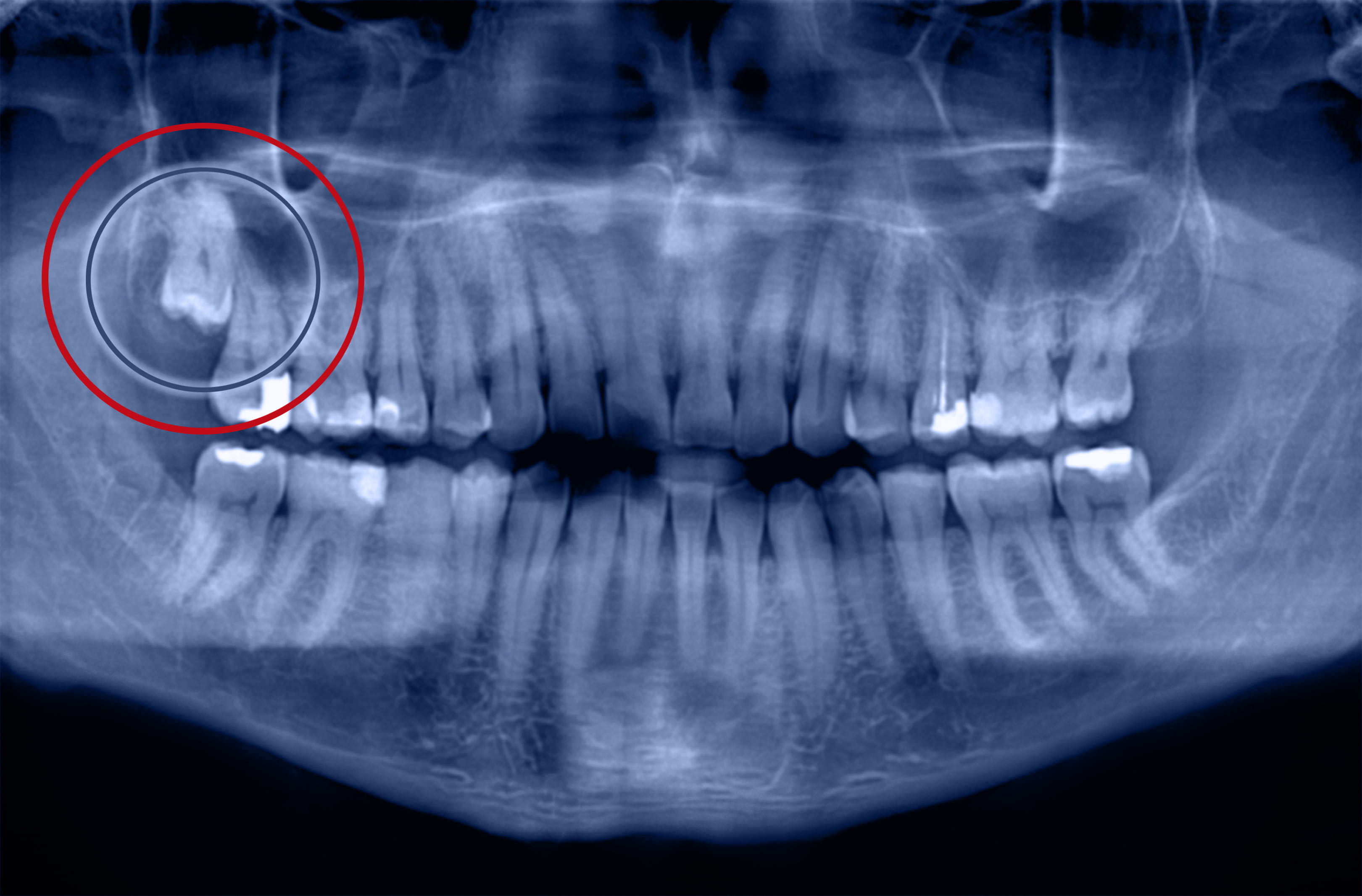
Wisdom teeth typically erupt between the ages of 17 and 25. By this time, the rest of the dentition is already complete, often leaving little room for their eruption. As a result, they are frequently associated with various oral health problems. Understanding these issues helps you know when to intervene or when to consult a dentist if you have any concerns.
Wisdom Teeth Often Make Irregular Eruption
Unlike other teeth, wisdom teeth don’t always have enough space to erupt properly. They can:
- Remain partially impacted under the gum;
- Erupt at an angle (forward, backward, or horizontally);
- Never erupt completely.
This lack of space is one of the main causes of complications, as it disrupts their positioning and function. In some cases, a partially erupted tooth can create an opening in the gum where bacteria accumulate, promoting infections.
Their Positioning Complicates Hygiene
Wisdom teeth are located at the very back of the mouth, making them more difficult to reach with a toothbrush and dental floss. This reduced accessibility can lead to:
- Plaque and tartar buildup;
- An increased risk of cavities;
- Localized gum problems.
Even when wisdom teeth are fully erupted, their position can make daily cleaning incomplete.
Risks of complications not to be overlooked
When wisdom teeth are poorly positioned or difficult to clean, several complications can arise:
- Tissue infections (pericoronitis): painful inflammation of the gum around the tooth.
- Cavities that are difficult to treat: particularly under the gum or between the teeth.
- Damage to neighboring teeth: continuous pressure exerted on adjacent roots.
- Bacterial buildup: which can lead to pain, swelling, or bad breath.
Extraction or monitoring of wisdom teeth: a case-by-case decision
Contrary to popular belief, wisdom teeth should not always be removed. The decision depends on several factors:
- Their position and orientation;
- The presence (or absence) of symptoms;
- The risk of medium- or long-term complications;
- The ability to clean them properly.
A well-positioned, asymptomatic, and easy-to-maintain wisdom tooth can be kept. In this case, regular monitoring is essential to ensure that no problems develop over time.
Conversely, extraction may be recommended if signs of complications appear or if the risk is deemed high.
The importance of professional monitoring
Each situation is unique. A clinical evaluation, along with X-rays, allows for a thorough understanding of the position of wisdom teeth and helps anticipate potential problems.
Regular follow-up with your dentist is therefore essential to:
- Quickly detect signs of complications;
- Assess the progress of eruption;
- Make an informed decision regarding a possible extraction.
Wisdom teeth don’t always cause problems, but their unpredictable eruption, challenging position, and the risk of complications warrant special attention. A personalized approach, based on an evaluation by your dentist at Carrefour dentaire 440 in Laval, remains the best way to preserve your oral health.