



Have you just learned that a dental crown is recommended for you and you have a lot of questions? That’s perfectly normal. This restoration is one of the most common prosthetic treatments, but it often raises questions about its placement, lifespan, and cost. Here’s a FAQ to help you better understand what to expect before you get started.
What exactly is a dental crown?
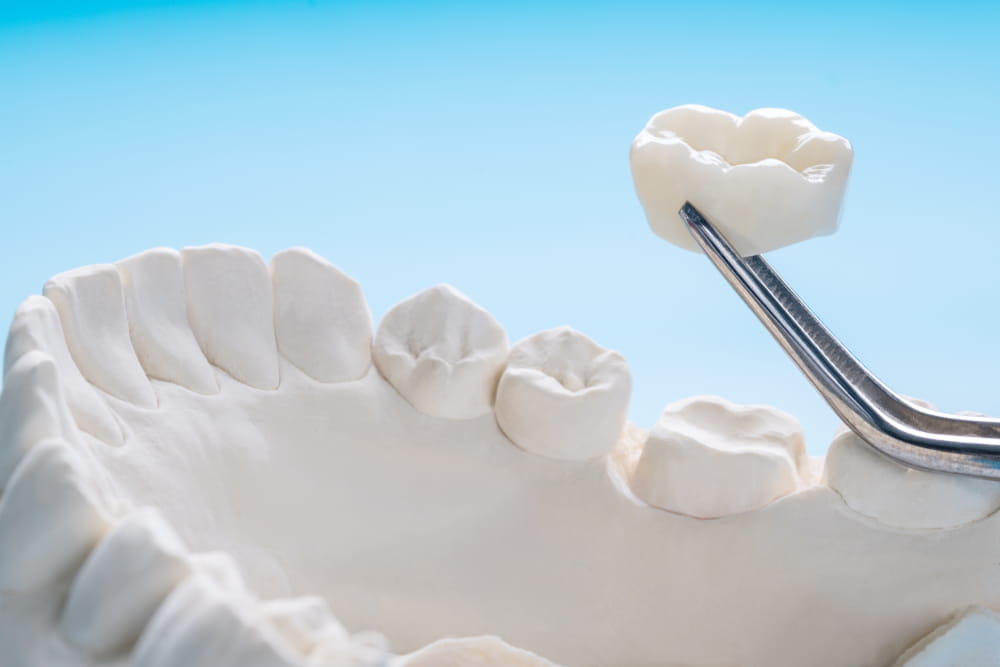
A dental crown is a custom-made “cap” that completely covers the visible part of a damaged tooth. Think of it as a helmet that protects what remains of your natural tooth.
It’s used when a tooth is too fragile to be repaired simply with a filling.
When is a crown necessary?
Your dentist might suggest a crown in several situations:
- After a root canal, to prevent the tooth from splitting;
- To restore a broken or severely worn tooth;
- To crown over a dental implant to replace a missing tooth;
- To improve the shape or appearance of a damaged and visible tooth.
The goal is always the same: to preserve the tooth for as long as possible and promote good chewing function, in addition to restoring its appearance.
How is a crown fitted?
The fitting usually takes place over two appointments. During the first appointment, the dentist prepares the tooth by removing the damaged part and shaping it to accommodate the crown. A digital or physical impression is then taken, and a temporary crown is fitted to protect you between visits.
At the second appointment, the final crown, fabricated in a laboratory according to precise measurements of your teeth, is fitted and then cemented onto the tooth. In the meantime, a temporary crown is necessary to protect the tooth between appointments.
Is it painful?
The procedure is performed under local anesthesia, so you shouldn’t feel anything during the tooth preparation. Temporary sensitivity after placement is possible, especially to hot or cold, but it usually subsides within a few days.
How long does a dental crown last?
With proper care, a crown can last between 10 and 15 years. Its longevity depends on your oral hygiene, habits (grinding, nail biting, opening packages with your teeth), and the quality of your follow-up appointments with your dentist.
Gently brushing the crown twice a day, flossing daily, and attending checkups are the best practices to maintain the restoration and the overall health of your teeth.
What factors influence the cost of a dental crown?
Several factors influence the cost of a dental crown from one patient to another:
- The material chosen (ceramic, zirconia, metal-ceramic, etc.);
- The type of tooth being treated (incisor or molar);
- The complexity of the case and any necessary pre-treatments, such as a root canal or the placement of an abutment;
- The laboratory that manufactures crowns.
A clinical examination with X-rays is necessary to assess your situation and provide you with a detailed treatment plan. If you have dental insurance, check with your insurer regarding the coverage applicable to your policy.
What if I don’t act right away?
Delaying treatment for a weakened tooth can lead to complications: complete fracture, infection, or loss of the tooth. Early diagnosis often prevents more complex treatments later.
A dental crown is a proven treatment to protect and preserve a weakened tooth. Every mouth is unique, and only an examination can determine if this solution is right for you. To discuss your situation, make an appointment at Carrefour Dentaire 440 in Laval.